The 2026 Emoji Translator: 5 Symbols That Betray Your Age (And How to Fix Them)
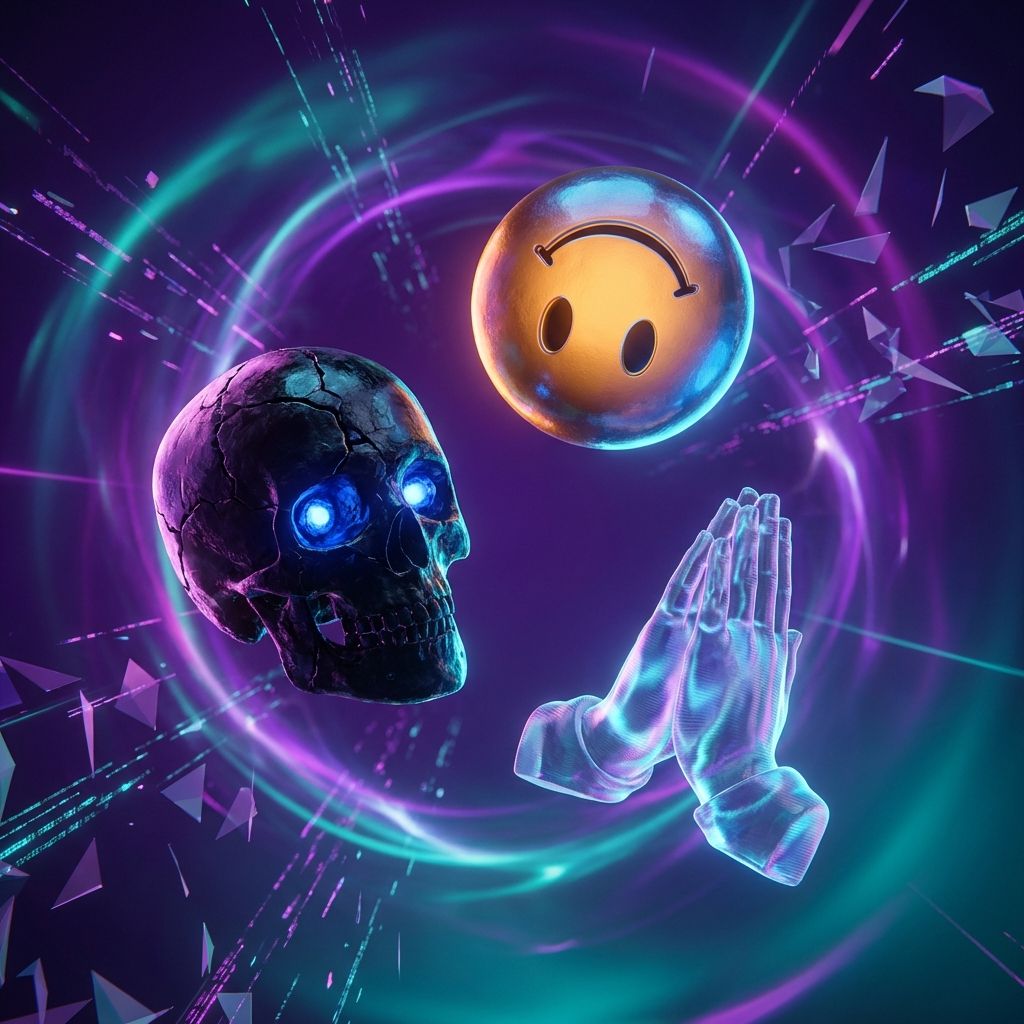
Emoji literacy isn't just internet slang anymore—it's a soft skill. In 2026, sending the wrong smiley to your Gen Z intern or your Boomer boss doesn't just make you look 'out of touch'; it creates a tonal dissonance that can silently derail relationships.
We call this 'Irony Poisoning,' and the antidote isn't stopping; it's translating. Here are 5 popular emojis that have completely different meanings depending on who's reading them—and exactly how to use them without causing a diplomatic incident.
1. The Upside-Down Face 🙃
The Psychology
Originally designed to convey silliness, this face has evolved into the universal symbol for passive-aggressive coping. It's a defense mechanism: 'I am saying something devastatingly sad or incredibly angry, but I am smiling upside down so you don't have to comfort me.'
Risk Level: 8/10
High. In a professional setting, this screams, 'I hate this task, but I'm doing it because I need to buy groceries.'
The 'Mojiologist' Verdict
Use ONLY when acknowledging a minor disaster that is nobody's fault. Example: 'The printer is on fire again 🙃.' Do NOT use when giving feedback.
2. The Skull 💀
The Psychology
RIP to the 'Crying Laughing' emoji (😂), which was buried by Gen Z in 2021. The Skull is its successor. It represents 'I'm dead'—not literally, but from laughter, shock, or secondhand embarrassment. It's hyperbolic humor.
Risk Level: 4/10
Moderate. Using it correctly makes you look culturally fluent. Using it when someone actually shares bad news makes you look like a sociopath.
The 'Mojiologist' Verdict
Safe for Slack channels with good rapport. If a colleague shares a funny mistake, a single skull is appropriate. Avoid in client emails.
3. The Sparkles ✨
The Psychology
Once a symbol of magic, sparkles now act as 'emphasis italics' for sarcasm. They frame a statement to highlight its absurdity. It's the visual equivalent of a monotone, deadpan delivery.
Risk Level: 9/10
Extreme. 'Just following up ✨' reads as hostile. 'Great job ✨' reads as condescending.
The 'Mojiologist' Verdict
Retire this from your work lexicon unless you are genuinely talking about cleaning products or magic shows. The risk of misinterpretation is too high.
4. The Clown 🤡
The Psychology
Self-deprecation at its finest. The clown is used to admit you've been fooled, or that you held a belief that turned out to be pitifully wrong. It says, 'I am the circus.'
Risk Level: 6/10
Variable. It's great for owning up to a mistake in a funny way ('I thought I fixed the bug but I broke prod 🤡'), but can undermine your authority if overused.
The 'Mojiologist' Verdict
Use sparingly to show humility. Never use it to describe *someone else* unless you want a meeting with HR.
5. Melting Face 🫠
The Psychology
The definitive mood of the mid-2020s. It captures the feeling of maintaining a polite facade while breaking down internally due to heat, stress, or embarrassment. It's the 'Everything is fine' dog in emoji form.
Risk Level: 2/10
Low. It's widely relatable and rarely offensive. It's a great way to soften a complaint about workload or weather.
The 'Mojiologist' Verdict
Approved for all audiences. 'This deadline is tight 🫠' is a universally understood cry for help that doesn't sound whiny.
The Tonal Shift: Irony Poisoning
The common thread here is 'Irony Poisoning.' Younger generations use emojis not to illustrate their words, but to subvert them. A heart isn't love; it's a condescending pat on the head. A thumbs up isn't agreement; it's a dismissal.
When you use them earnestly, you risk looking naive. When you use them ironically in the wrong context, you look mean. The key is reading the room—and knowing when to just use words.
Conclusion
Before you hit send on that next Slack message, take a second look at your 'Frequently Used' keyboard. Are you communicating clearly, or are you accidentally signalling that you're on the verge of a breakdown?
Audit your emojis. And when in doubt, just type it out.